What to See in Chongqing: Places Worth the Trip
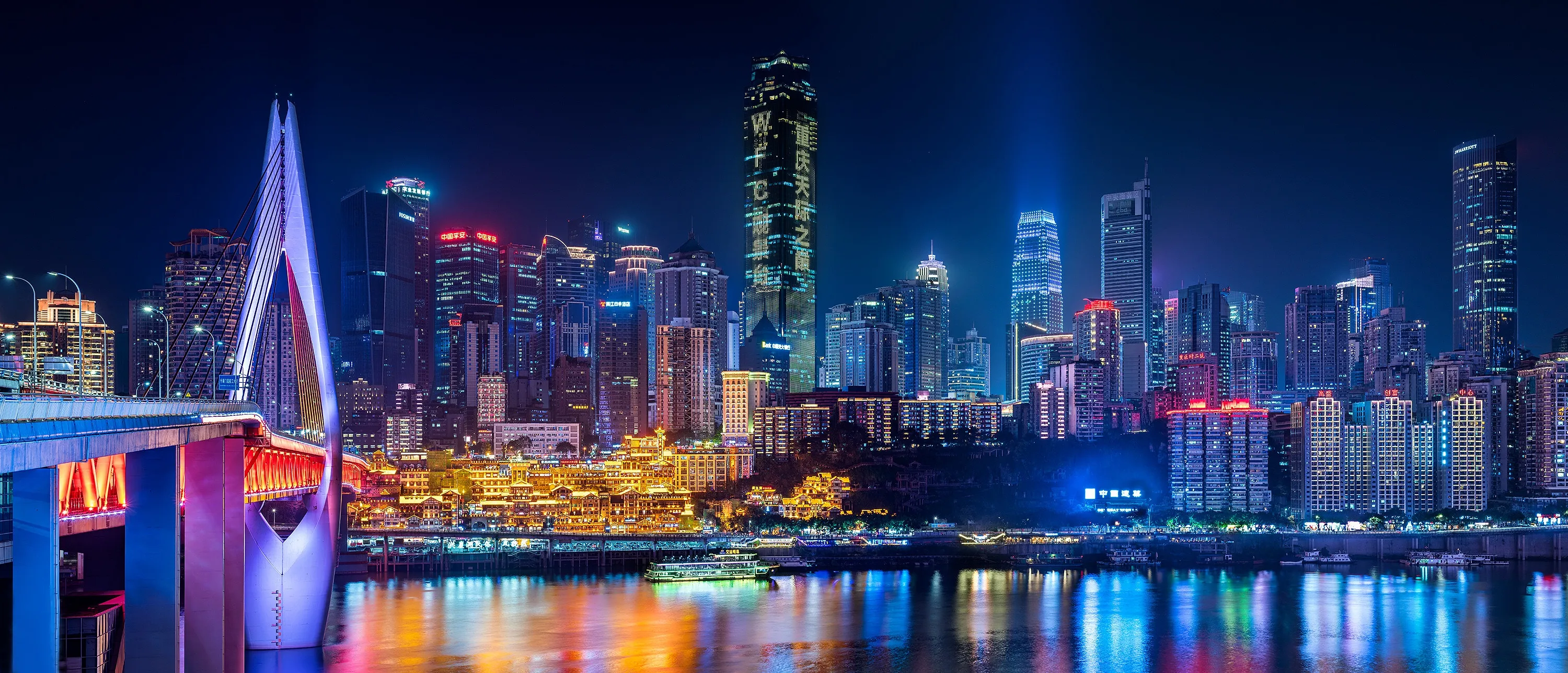
Chongqing doesn’t look like any other Chinese city. It sits on hills, splits around two rivers, and is built so densely that roads stack on top of each other in several layers. That’s why people call it the 8D city. A normal map barely helps here, but it also makes this one of the most photogenic places we’ve ever lived in. Here’s where to go first.
Hongyadong
Hongyadong is a multi-level complex on the Jialing riverbank, built in the style of old stilt houses. By day it’s a regular shopping quarter with cafes and souvenir shops. Once the sun goes down, the lights come on and the whole building turns into a glowing wall of stacked floors. You can see it two ways: from below on the embankment, or from above on the bridge or the viewing platform across the water. For the postcard shot, arrive about half an hour before sunset and stay until the lights switch on.
Liziba: The Monorail Through a Building
Liziba station is famous because line 2 of the monorail runs straight through a residential building, cutting between its sixth and eighth floors. The building went up after the line was already there, and rather than reroute it, the city just built around the track. It’s now one of the strangest and most photographed pieces of engineering in China. The best shot is from the bridge next to the station, where you can watch the train come straight out of the wall. Trains run often, so you won’t wait long for one.
Eling: Skywalk and Park
Eling sits on the highest point of the central peninsula, which makes it one of the best spots in the city for a panoramic view. A glass skywalk juts out past the edge of the hillside, so you end up looking straight down at the city and the river below. Next to it is a terraced park where you can sit and watch the sunset without the crowds that gather at the more famous lookout points.
Kuixinglou
A small historic tower standing in the middle of glass skyscrapers. The contrast between the old wooden pavilion and the modern towers around it sums up Chongqing pretty well: the city doesn’t hide its old buildings, it just builds the new ones right next door. It’s a compact spot, more a twenty to thirty minute stop between other places than a destination on its own.
Chaotianmen and Raffles City
Chaotianmen, where the Yangtze and the Jialing meet, has been the city’s main gateway for centuries, the point where boats once arrived and departed. Raffles City now stands right next to it: eight towers connected by a glass skybridge across the top floors. There’s a paid observation deck up there with views of both rivers, though the rooftop pool belongs to a private club and isn’t open to regular visitors. It’s one of the most modern corners of the city, and a good contrast to the older neighborhoods around it.
Jiefangbei
Chongqing’s central pedestrian square, built around a monument to victory, is also where the city’s modern business district grew up. By day it’s a good place to wander the shopping streets and duck into a cafe; by evening the whole area lights up with neon signs and becomes one of the liveliest parts of the city. The embankments of both rivers are also just a short walk away.
Yangtze River Cableway
One of the city’s signature rides: the cable car cabins cross right over the river, linking the two banks. The trip only takes a few minutes, but the view of the bridges and skyscrapers from above the water stays with you. It’s especially good in the evening, once the lights are on below and the cabin drifts slowly over the river.
Ciqikou
An old quarter on the west side of the city, built on a hill above the river: narrow lanes, stone steps, wooden houses, and teahouses where locals play cards and mahjong. It’s a good place to see Chongqing without the skyscrapers, closer to how it looked before the building boom. Wander through slowly, try the street food, and stop into shops selling tea and spices.
Night Views and the Riverfront
Chongqing earns its reputation as a city that looks better at night than by day. Both riverfronts have walking paths where you can take in several layers of the city at once: bridges, lit-up towers, boats moving on the water. If you only have one evening, pick a single stretch of riverfront and walk the whole thing rather than jumping between several spots. The view changes gradually as you go, and that’s part of the pleasure.
Hotpot
Chongqing hotpot deserves its own mention. The local version is spicier than the Sichuan one and counts as one of the most fiery in the country, with a broth built on dried chili, Sichuan pepper, and beef tallow. If spice isn’t your thing, most places will do a split pot, half spicy and half mild, in the same bowl. Set aside a whole evening for a hotpot dinner in Chongqing. Don’t squeeze it in between other plans.
How to See It All
Most of these spots sit within the central part of the city, and only Ciqikou is a bit further out, in the Shapingba district. Even downtown, though, the hills and the layout of the roads mean the route between points isn’t always obvious: two places that look close together on the map can mean climbing stairs down and back up, or a detour across a bridge. That’s why a lot of visitors end up losing time getting from place to place instead of taking photos and enjoying the walk.
We live in Chongqing ourselves and regularly drive guests between these spots, timing the route so you catch the sunset at one point and the evening lights at another. If you’d rather see the city this way than navigate between bridges with your phone in hand, get in touch. We’ll put together a route around your dates and suggest what to add if you have time left over.
Want to see it in person?
Message us and we will plan a trip around your dates.
More guides
Your First Days in China: Internet, Pay, Taxis and Apps
A short practical guide to internet, paying with a foreign card, taxis, and reading menus in your first days in China.
How to Get to the Avatar Mountains in Zhangjiajie
Zhangjiajie, the real Avatar mountains: how to get there, how many days to plan, the best season, and what to see inside the park.